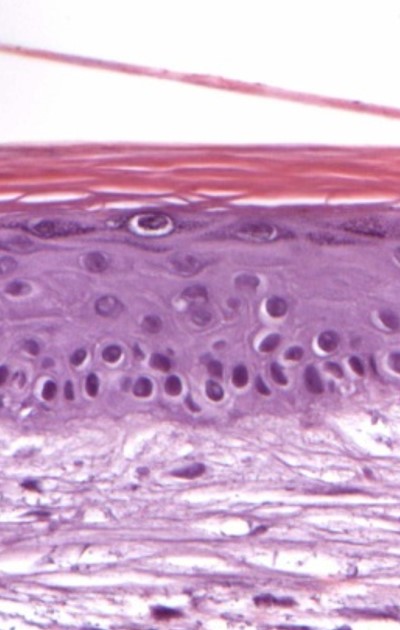
Our most native-like skin model, comprising both a fully stratified epidermis and a xeno-free dermal matrix generated exclusively by primary dermal fibroblasts. This model can outlast any other in culture, making it ideal for skin ageing studies and other types of long-term testing.
Quick facts:
Fully stratified epidermis
Self-constructed dermal extracellular matrix
Primary human keratinocytes and fibroblasts
Applications
Skin ageing studies
Basement membrane studies
Long-term efficacy testing
Dermal-epidermal interaction studies
Specifications
6-well or 12-well formats available
20-week culture longevity
Models ship with the following items:
Culture media
Plasticware
Request a quote
Contact us to request a quote or find out more about our Fibroblast-Derived Matrix Models
Our Fibroblast-Derived Matrix (FDM) skin model is engineered using primary human keratinocytes and dermal fibroblasts, with the fibroblasts naturally generating the dermal extracellular matrix. This model exhibits normal epidermal stratification, cell proliferation, and differentiation, alongside a functional basement membrane and effective barrier properties.
The FDM model is suitable for testing a wide range of ingredients across cosmetic, cosmeceutical, pharmaceutical, food, chemical, and consumer product sectors.
Clients have the option to receive the skin models for in-house testing or to utilize our comprehensive testing services.
APPLICATIONS
The Fibroblast-Derived Matrix Model (FDM) can be used for a number of product tests, including:
Skin ageing studies: FDMs enable the assessment of ingredients on ECM formation by reticular of papillary fibroblasts, and key markers analysis such as fibroblast activity, collagen integrity and degradation and barrier function, providing critical insights for anti-aging products.
Basement membrane studies: Our models provide detailed insights into basement membrane composition, enabling the study of membrane integrity.
Dermal-epidermal interaction: A fully formed basement membrane allows for a comprehensive study of dermal-epidermal interaction.
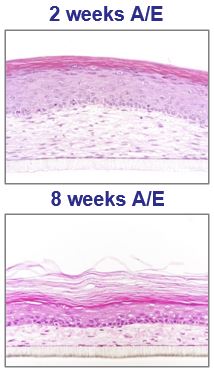
Long-term efficacy: A culture time of up to 20 weeks enables the study of long term compound effects.
Case study
FDMs were used to examine the long-term effect of cosmetic compounds. Readouts included: